Opal Stone Guide
A practical jeweler’s guide to understanding opal quality, color, types, value, symbolism, and everyday wear.
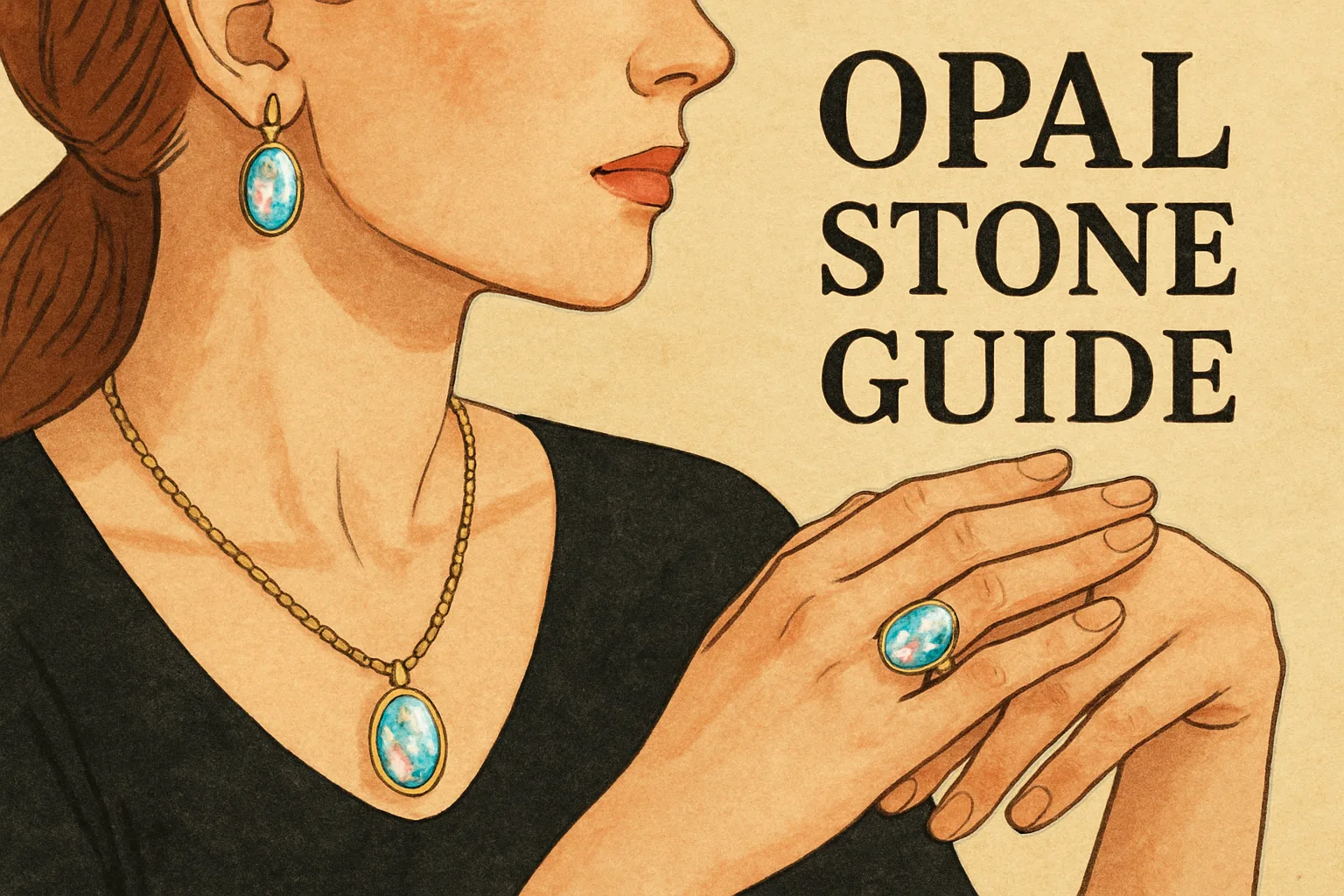
- Opal is prized for play-of-color: shifting flashes that can show red, orange, green, blue, violet, or a full rainbow.
- The most valuable pieces are judged by color intensity, pattern, body tone, transparency, origin, cut, size, and stability.
- Black opal is often the most expensive variety, especially when it has bright red or multicolor flashes on a dark body tone.
- Australian opal dominates the fine market, but Ethiopian, Mexican, and other origins can also produce beautiful stones.
- Opals are wearable, but they are softer and more moisture-sensitive than sapphire or diamond, so thoughtful setting and care matter.
Opals have a reputation for being mysterious, emotional, and slightly unpredictable — and from a gemological point of view, that reputation is not entirely unfair. Unlike many gems valued for one stable hue, the opal gemstone is judged by movement, light, angle, structure, and the strange beauty of color appearing from within the stone. At silver-lines, the focus is practical: how a jeweler and gemologist looks at opals before admiring them, buying them, setting them, or recommending them for everyday jewelry.
What Makes Opal Different from Other Gemstones
Opal is a hydrated form of silica, which means it contains water within its structure. This is one reason the opal stone behaves differently from harder crystalline gems such as diamond, ruby, sapphire, or quartz. Its internal structure can diffract light, producing the famous play-of-color that makes fine opals look alive. When people talk about opal color, they may mean two things: the body color of the gem itself and the flashes of spectral color seen across its surface.
Not every opal shows play-of-color. Common opal can be milky, pink, blue, yellow, brown, or translucent without the dramatic rainbow flashes associated with precious opal. Precious opal, by contrast, displays shifting color patches or patterns that move as the stone is tilted. This effect is the reason opal is rarely judged by a single photograph; a video, daylight inspection, or side-to-side movement usually tells the truth much better.
A good opal is not simply “colorful.” It has color that reacts to light, angle, and movement in a way that feels dimensional rather than painted on.
For jewelry lovers, this makes opal one of the most personal gems to choose. Two stones with similar weight can look completely different: one may show green and blue pinfire, another broad orange flashes, another rare red rolling color. For jewelers, the challenge is equally specific. The gem must be attractive, stable, well-cut, and protected enough for the intended piece — especially rings, which take more daily impact than pendants or earrings.
Types of Opal You Are Most Likely to See
The market uses several overlapping terms for types of opal: some describe body tone, some describe origin, some describe structure, and some describe treatment or assembly. This can confuse buyers because a seller may call a stone “natural,” “solid,” “Australian,” “crystal,” “black,” or “boulder” — and each word answers a different question. A careful description should tell you what the opal is, where it is from if known, whether it is solid or assembled, and whether it has been treated.
The table below gives a practical overview. It is not a strict price chart, because opal price varies widely even within one category, but it helps explain why two opals of similar size may not be comparable in value.
| Type | What it means | Typical appeal | Buying note |
|---|---|---|---|
| Black opal | Precious opal with a dark body tone | High contrast, intense flashes, premium appearance | Often expensive; check brightness, pattern, and natural origin |
| White or light opal | Precious opal with pale body color | Soft, luminous, classic look | Can be affordable or valuable depending on brightness and pattern |
| Crystal opal | Transparent to semi-transparent precious opal | Depth, glow, floating play-of-color | Look for clarity without losing color strength |
| Boulder opal | Opal naturally attached to ironstone host rock | Organic patterns, durability from backing rock, strong contrast | Thickness includes host rock, not only opal layer |
| Fire opal | Yellow, orange, or red opal, often from Mexico | Warm transparent color; may or may not show play-of-color | Do not assume “fire” means rainbow flashes |
| Doublet or triplet | Assembled opal with backing and sometimes a clear cap | Accessible price and strong face-up appearance | Needs disclosure; avoid soaking and harsh cleaning |
Australian opal has long been the benchmark for fine material, especially from famous fields such as Lightning Ridge, Coober Pedy, Andamooka, and Queensland boulder opal areas. Lightning Ridge is particularly associated with exceptional black opal, while Coober Pedy is known for light opal. Australia is not the only source, however. Ethiopian opal can show spectacular brightness and broad color play, while Mexican fire opal is loved for its warm orange to red body color.
Solid opal
A single natural piece of opal, cut and polished without being assembled from layers. This is generally the preferred form for collectors and higher-value jewelry, assuming the stone is stable and attractive.
Opal doublet
A thin slice of opal attached to a dark backing, often used to increase contrast. Doublets can be beautiful, but they should be priced and cared for as assembled gems.
Opal triplet
A thin opal layer with backing and a clear protective top, commonly quartz or glass. Triplets are budget-friendly, but they are less collectible than solid stones.
Opal Meaning, Birthstone Tradition, and Symbolism
Opal meaning has shifted dramatically across cultures and periods. Today, many people associate opal with creativity, emotional expression, intuition, and transformation. Its changing colors make it a natural symbol for complexity and individuality. For someone who does not want a gem that looks identical in every light, opal can feel more personal than a classic transparent stone.
The opal birthstone is traditionally connected with October, sharing the month with tourmaline in modern birthstone lists. This makes it a popular gift for October birthdays, autumn engagements, and sentimental jewelry. Because opals vary so widely, the birthstone category is unusually flexible: a minimalist wearer may prefer a pale milky opal, while someone drawn to drama may want black opal with electric color.
There is also an old superstition that opals bring bad luck unless they are your birthstone. From a professional jewelry perspective, this is folklore rather than gemology. The real “risk” with opal is not mystical; it is practical. A poorly chosen or poorly set opal can chip, crack, craze, or suffer from careless cleaning. A well-selected opal in an appropriate setting can be cherished for many years, especially when the owner understands how to wear and store it.
How Opal Price and Quality Are Judged
There is no single universal price per carat for opals in the way buyers sometimes expect. The opal gem market is visual and nuanced. Two stones of the same weight can differ dramatically if one has weak blue-green pinfire and the other has bright red broad flash on a dark body tone. In general, red and orange play-of-color are rarer and more valuable than blue and green, though beauty is always judged in the whole stone, not by one color alone.
The most important value factors include brightness, pattern, color range, body tone, size, shape, cut quality, origin, thickness, transparency, and stability. Pattern names such as harlequin, flagstone, broad flash, rolling flash, straw, chaff, floral, and pinfire can influence desirability. Some patterns are rarer and more collectible, but they still need brightness. A rare pattern with dull color may be less appealing than a simpler pattern with vivid life.
Value signs to look for
- Bright play-of-color visible in normal light
- Strong contrast between body tone and color flashes
- Attractive pattern across the face of the stone
- Good polish and balanced cabochon shape
- Clear disclosure of origin, treatment, and structure
Warning signs to question
- Color visible only under very strong display lighting
- Cracks, crazing, pits, or cloudy dead areas
- Vague terms such as “natural look” without details
- Doublets or triplets sold as solid opals
- Prices that ignore treatment, assembly, or durability issues
Origin matters, but it should not replace looking at the stone. A fine Australian opal can command a premium, especially if it is natural black opal with strong brightness. Yet a beautiful Ethiopian opal may be more visually impressive than an average Australian stone. The key is disclosure: some hydrophane opals absorb water and may temporarily change appearance when wet. That does not automatically make them bad, but it does affect care, setting decisions, and buyer expectations.
For buyers, the smartest question is not “What is the cheapest opal price?” but “What am I paying for?” In a ring, durability and setting quality matter more. In a pendant, you may accept a larger, more delicate stone because it faces less impact. In a collector’s piece, untreated solid material with strong play-of-color and documented origin may be worth the premium. Value follows context.
How to Choose, Wear, and Care for Opal Jewelry
Choosing opal starts with the intended use. A pendant, brooch, or earrings allow more freedom because they are less exposed to knocks. A ring needs stricter selection: a stable stone, a protective setting, and realistic expectations from the wearer. Opal ranks around 5.5 to 6.5 on the Mohs scale, so it is notably softer than many everyday jewelry gems. This does not mean opals are too fragile to wear; it means they are not “set and forget” stones.
When evaluating a stone in person, move it under different lighting. Jewelry store lights can flatter opals, while soft daylight may reveal a more honest picture. Look from the front, side, and angled positions. Check whether the play-of-color covers the whole face or only one small area. Notice dead spots, surface scratches, uneven polish, and any signs of cracking. If the stone is set, inspect whether claws, bezels, or edges protect it without hiding too much color.
- Decide the jewelry type first. Rings need tougher settings and better-protected stones, while pendants and earrings can handle more delicate opals.
- Ask whether it is solid, doublet, or triplet. This affects value, care, repair options, and long-term expectations.
- View it in more than one light. Fine opal should not depend entirely on harsh spotlighting to look alive.
- Check for stability issues. Avoid visible cracks, crazing, lifting layers, or suspiciously dry, chalky surfaces.
- Match care to the stone. Keep opals away from ultrasonic cleaners, steam, sudden heat, and aggressive chemicals.
For care, use a soft damp cloth and mild soap only when needed, then dry gently. Do not place opal jewelry in ultrasonic or steam cleaners. Avoid wearing opal rings during gym training, gardening, dishwashing, heavy housework, or any activity where the gem may be hit or exposed to chemicals. Store opals separately from harder gemstones, because diamonds, sapphires, and even quartz can scratch them.
There is a common fear that every opal must be constantly soaked in water. That is too simplistic. Solid Australian opals generally do not need routine soaking, and assembled stones such as doublets and triplets can be damaged by prolonged water exposure because moisture may affect the adhesive layers. Hydrophane opals require particular care because they can absorb liquids. The best rule is moderate humidity, no extreme heat, no harsh cleaning, and no experiments.
Frequently Asked Questions About Opals
Opal questions often come from the gap between romance and practicality. The gem looks magical, but it still has material limits. The answers below focus on what buyers, makers, and jewelry wearers most often need to know before choosing an opal gemstone.
Is opal suitable for an engagement ring?
It can be, but only for someone who accepts careful wear. Opal is softer and more vulnerable than diamond, sapphire, or ruby. A protective bezel or low-profile setting is strongly recommended, and the ring should not be worn during rough activities.
Why is black opal usually more expensive?
Black opal often shows stronger contrast because bright play-of-color appears against a dark body tone. Fine examples with vivid red, orange, or multicolor flashes are rare, especially from famous Australian sources such as Lightning Ridge.
Are all opals from Australia better?
No. Australian opal has an important reputation and can be exceptionally valuable, but quality still depends on brightness, pattern, stability, cut, and overall beauty. Other origins, including Ethiopia and Mexico, can also produce desirable opals.
How can I tell if an opal is a doublet or triplet?
Look at the side of the stone if possible. A doublet often shows a visible join between the opal layer and backing. A triplet may show a domed clear cap over a very thin opal layer. When in doubt, ask for written disclosure from the seller.
What is the best opal color?
The most valuable play-of-color often includes red and orange, especially on a dark body tone. However, the “best” color for jewelry is the one that is bright, attractive, well-distributed, and suited to the wearer’s taste.
Explore jewelry with a gemologist’s eye
Read more practical gemstone guides, brand reviews, and critical jewelry insights from silver-lines.